I stood on my first day on a street in Dhaka and smelt the warm dust as cycle rickshaws with colourful canopies wove between little green tuc- tucs, and buses with peeling paint, looking as if they have been stuck together with gaffer tape.


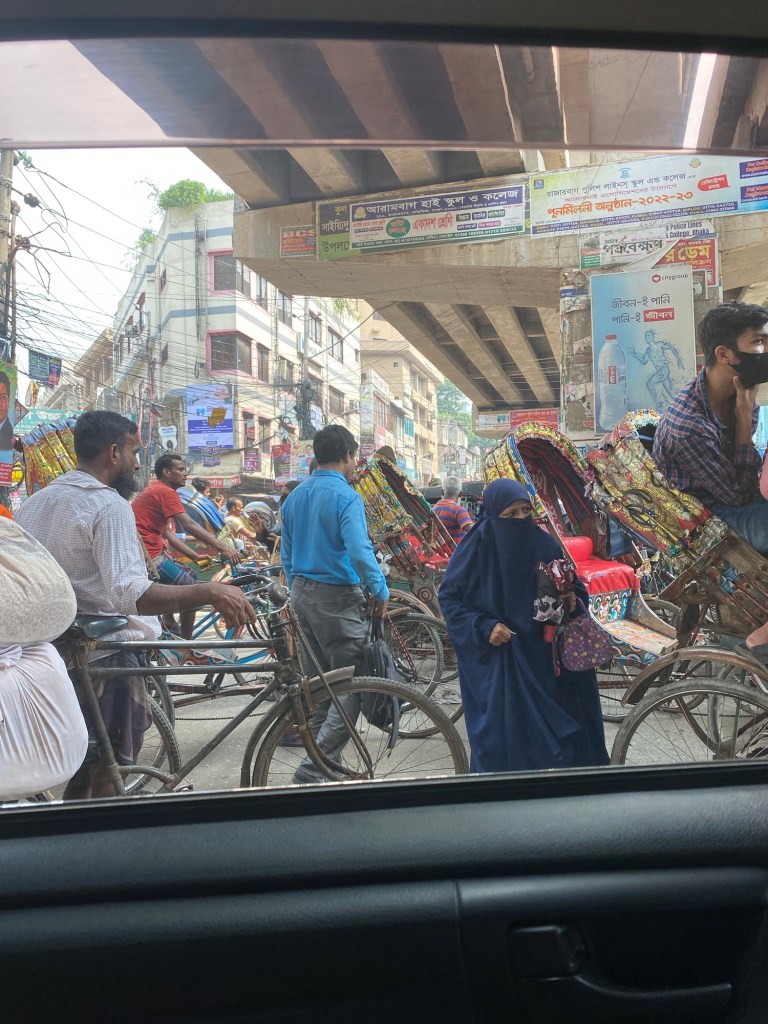
I felt as if I had returned home. I looked back on my early years in which sustenance and stability were provided to me by Indian, Chinese and Malay servants. They prevented me from being a lost child. I stood on that dusty street and was filled with nostalgia as if life had come a full circle.
The following day we explored Dhaka spending most of the day in the minibus due to the time it took to get from one place to another. The sun was obliterated by the heavy pollution, yet we did achieve visiting faded mosques, temples and a Christion church, plus visit a number of markets which is my favourite occupation, to walk in the streets and observe bustling vibrant humanity, the scent of spices and colourful unrecognisable fruit and vegetables.
I was travelling with a group of five people, a large American lady who told me she was 80 years old. She runs a specialised dog spa in which the dogs have their own swimming pool. They listen to concerts and have weekly manicures! A thin brown woman with bright purple hair and exposed arms covered in tattoos. She refused to comply with the local dress code, she was 72 and was born in the UK but had spent the last 20 years in San Francisco and a younger 59-year-old Englishman who ran a commercial property business in the north of England who was quietly derogatory. These three were essentially racist which I found shocking and surprising; they had no interest in the indigenous culture.
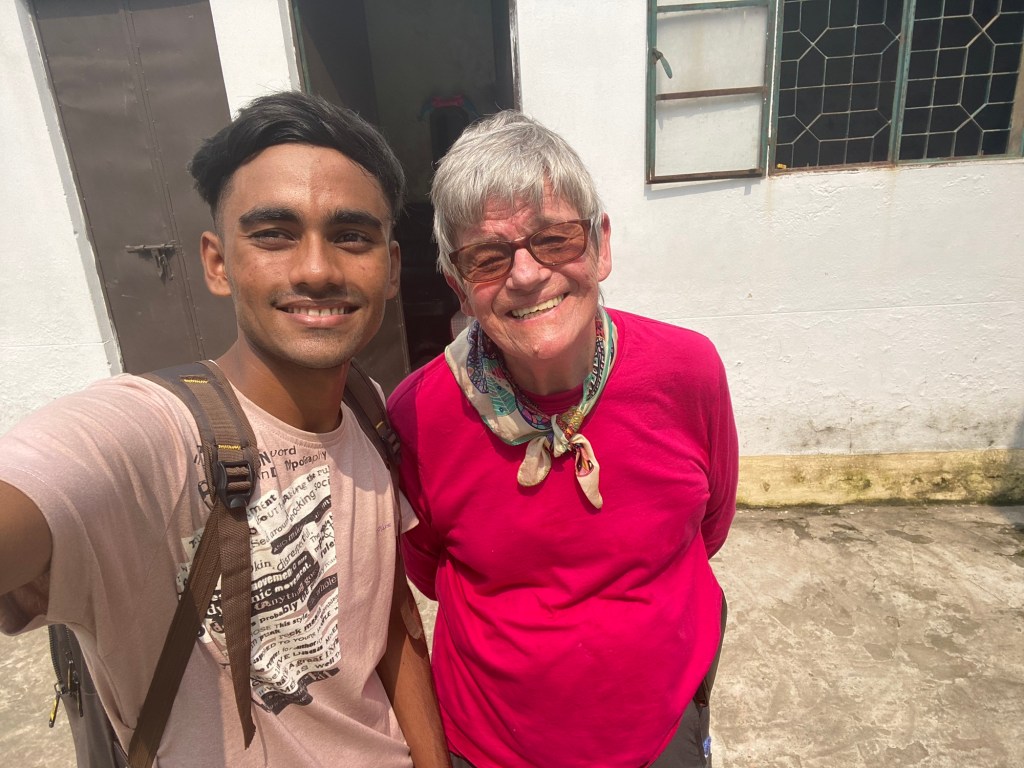
My situation was saved by the final member of the group, a Filipino girl who worked as a nurse in Bristol who was lovely and we tried to separate ourselves from what I called ‘the tourists from hell’ and ally ourselves to Mostafa, our lovely guide, and Shan the tour guide trainee, aged 19 who felt shy and nervous as we started the tour. I was delighted to see this young person and said airily,
‘You can be my new grandchild!’
We left the mists and chaos of Dhaka and made our way to Bogra, we left the grey high-rise buildings, some of which were half built and some falling into decaying disrepair.
We had a surprising stop to a family that cast brass in an age-old fashion. They made works of art in the shape of Hindu gods and exhibited their work in Europe.


The wonder of it was that I was transported into a magical garden, with sculptures, lush greenery, bright flowers and cooing pigeons.
I bought a delicately formed Hindu god called Kartec, the god of youth and war which I later gave to my grandson who informed me that Kartec was the son of Shiva and brother of Ganesh, the elephant god. We ended the day by visiting a vast site of a Buddhist monastery dating to the 3rd century BC. It had atmosphere, you felt the past and there was peace.
Everywhere we went, people found us a novelty, Europeans are so seldom seen. We have to comply with requests from the public to be photographed with them.
My Filipino friend and I met two university students also at the monastery, a girlfriend and boyfriend, both studying physics. The boy was talkative, and we had an animated conversation. Photos all round! The girl was hesitant in speaking.
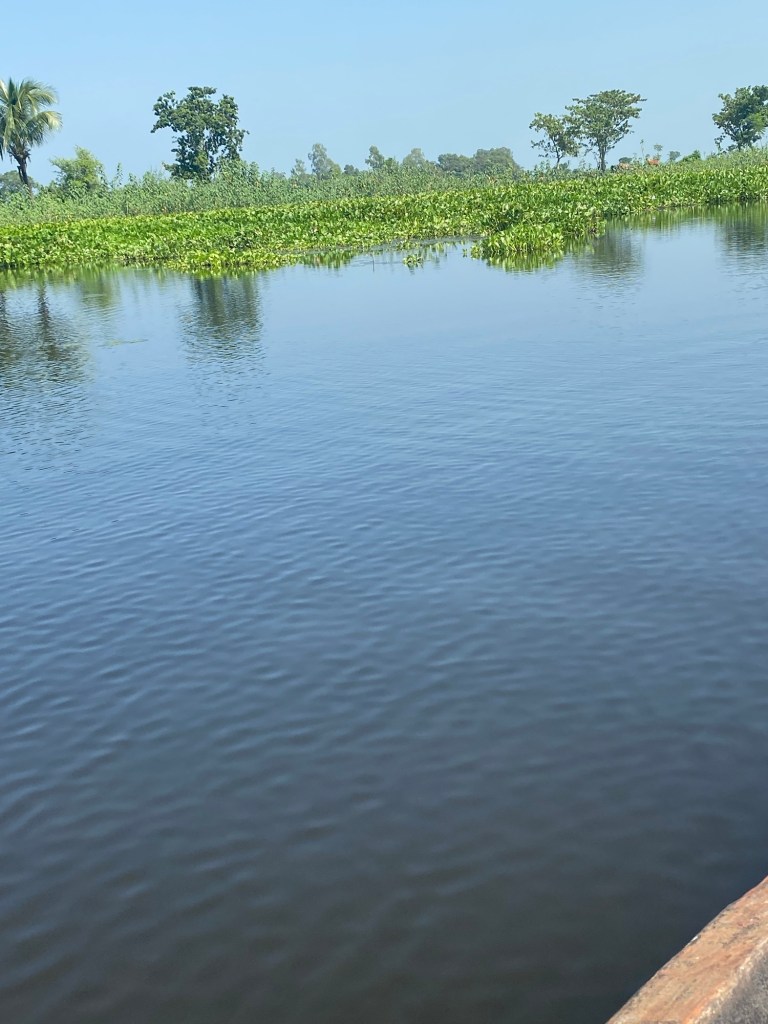
The following day, I found myself sitting on a plastic chair balanced on the deck of a boat as we glided through a misty verdant landscape towards a sand island on the Chars on the Jamuna River, the water was still and dark around me. I wanted to relish the quiet but my fellow passengers talked loudly oblivious of their surroundings and I rather wanted to push them into the river!
We arrived at the island, getting on and off boats was difficult for me, but Shan, my new designated grandson was always there, helping me with warmth and compassion.
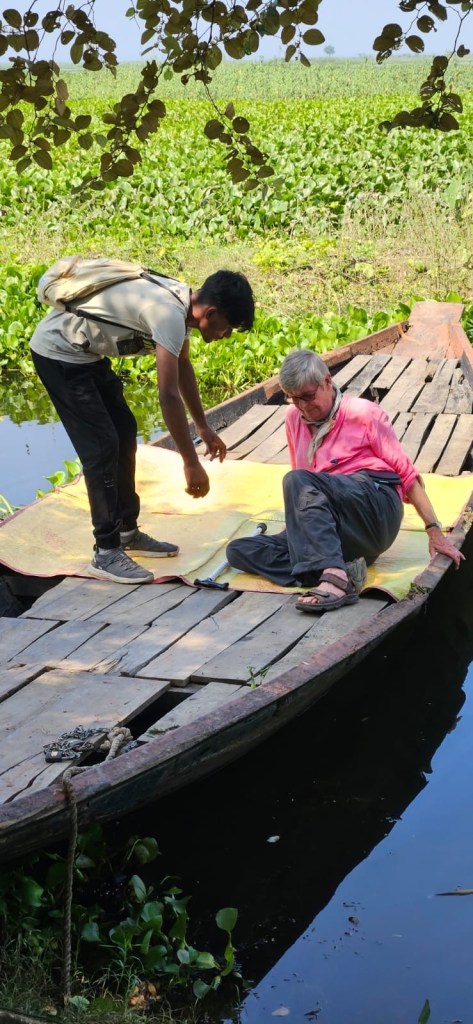
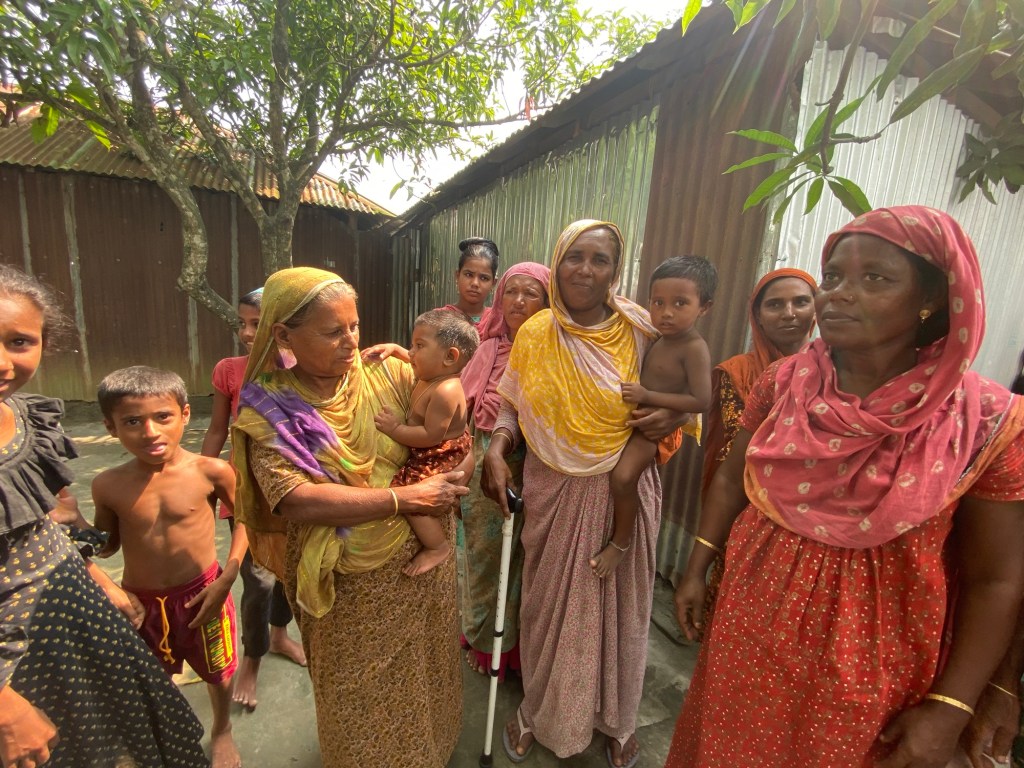
It was the first time, these indigenous people, who manage to farm on the island thanks to silt coming from the Himalayas had seen Europeans. We caused quite a stir.
The lovely Filipino and I communicated with the women, we conducted a separate experience and left the others to their grumbling. The women were warm and introduced their children and their relatives, I became allied with grannies and stood with them to have my photograph taken.
We drove to Rajishahi and were hijacked by an elephant. It looked as if it was running amok with fear, being surrounded by dense traffic. In reality, it was probably a circus elephant that had been trained to hijack European tourists, a small amount of money changed hands and we continued on our way. Mostafa bought a branch of the small sweet local bananas that were an almost sensual delight to eat.

We arrived in Rajishani to board a train to Jessore which was an evocative experience with a constant stream of vendors selling sweet coffee, children’s toys, and various sweetmeats, intermingling with the beggars, a blind boy calling out melodically and some badly disabled people, I wanted to look away. I wanted to give but I did neither.

Then to the Sundarbans, where we cruised through the oldest mangrove forest in the world. The home of the Bengal tiger. I loved it, the accommodation was simple but totally adequate, my compatriots could not use a tap, jug and bucket to wash and used wet wipes instead!
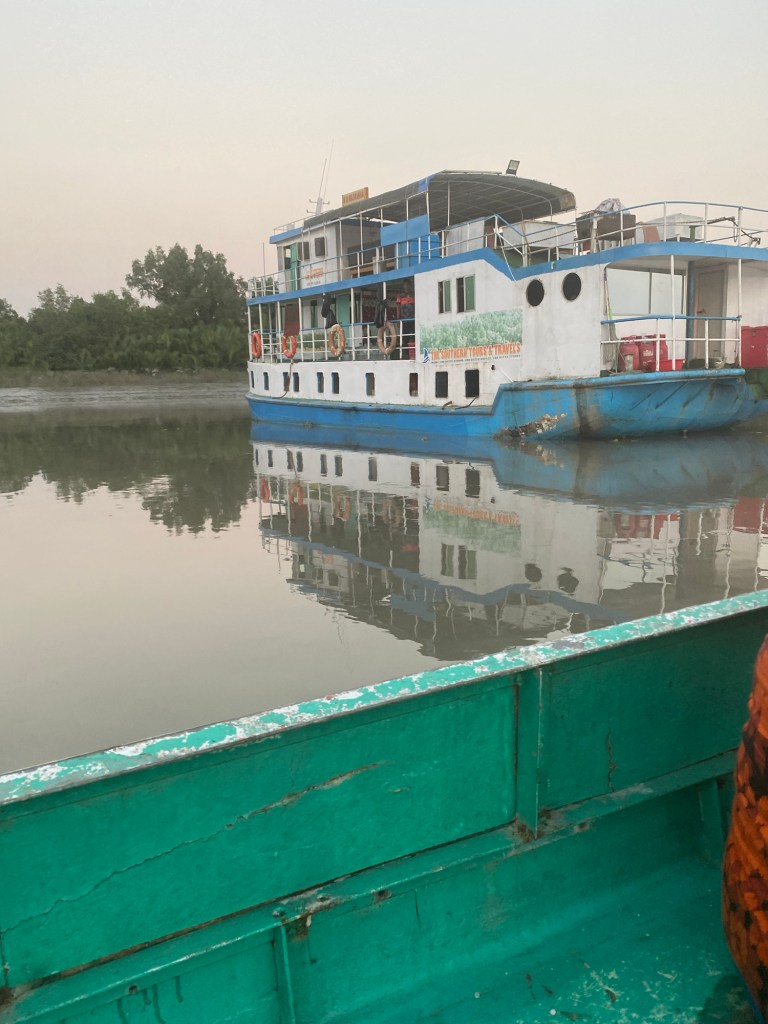
We slipped through waterways for nearly three days, searching the undergrowth for wild life, what shocked me was that there was so little, we saw the odd monkey, snake and a number of deer. I remember the teeming Jungle in Malaysia in the 1950’s. No wonder the Bengal tiger is a bit peckish and attacks humans. We had an armed guard in case the tiger attacked and saw fresh footprints.

Of course, I had to be manhandled on and off the boat, I managed thanks to Shan, he was always there quietly supportive. In the interim, we would talk, he is almost fluent in English, having started learning a year ago. He wants to improve himself; his parents are good and work hard. He comes from the rural tea planting area in Bangladesh.


Shan has a mind of his own and is such a thoughtful boy, we would discuss ethics and morals. He, from his Moslem perspective and me from my random European thought, yet we came to the same conclusions. Humanity is cross cultural.
There came a point when I funked climbing down a ladder from the boat to the shore and two men just picked me up and deposited me on the beach!
Overhead eagles circled.
‘They are sea eagles,’ I was told.
In the evenings, after a delicious meal cooked by the ship’s chef in a hot hole at the back of the ship, Mostafa our guide would tell us stories.
‘I want to tell you a story! ‘He cried.
‘We had an English couple as clients, they wanted to find a plane that crashed in the second world war on the border between Myanmar and Bangladesh. Their uncle was the pilot.’
‘We contacted an indigenous community in the Chittagong hills, they knew of the plane, which had become part of their heritage, but was now covered in foliage.’
‘The English couple came to Bangladesh, and we took them to the Chittagong hills. The village came together and cleared the undergrowth to reveal the plane. The English couple were so happy and with the help of the village created a memorial to their uncle on the outskirts’
We flew Bangladesh airlines back to Dhaka, a 25 -minute flight! But we were served snacks and drinks and treated as if we were very special people. I returned to the Sky City hotel in Dhaka where I had first arrived. There is an ethos in that hotel in which they really care for you, they look at you as an individual and try and cater to your needs. At my age, I have appreciated comfort to support my failing body
The following day, we made a 10 -hour minibus journey to Sylhet and as we crawled through the Dhaka streets, beggars knocked on the window hoping white tourists would give them money. A tall gaunt man, holding a boy, maybe 8 years old, whose legs hung uselessly beneath him. The man knocked on our window and we drove on. He bent and kissed his child.
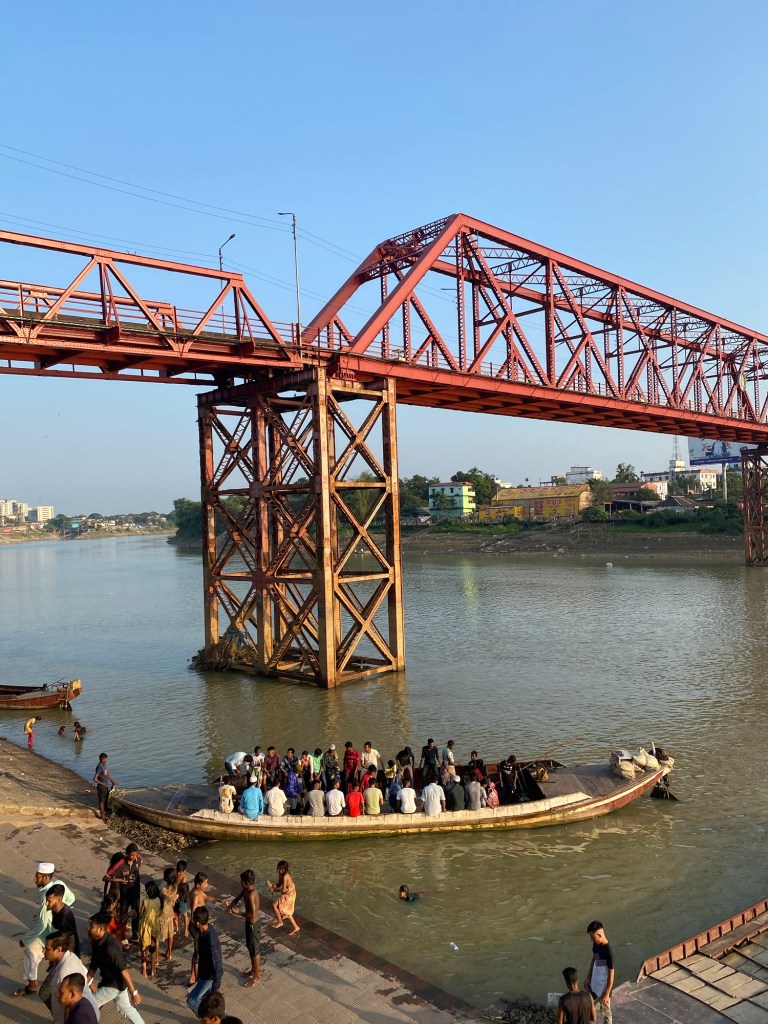

We arrived in Sylhet a bustling town but without the chaos of Dhaka, the town lies on the edge of a wide river and is famous for its iron bridge that was built by the British and a quaint clock tower made of corrugated iron.
The following day we drove to the Indian border where people collected stones from a shallow river to be used to make cement. There are few rocks in Bangladesh as it is mainly waterways and rich agricultural land.
We looked across the river to the mountains of India and watched trucks trundle across the border piled high with rocks.

Later we walked in a nature reserve on narrow paths through the forest paddling through a sparkling river to a neat indigenous village who made a living growing beetle nut.
On another evening, Mostafa, our guide invited us to his friend’s house in a nearby village. We were welcomed and plied with the fresh local fruit plus the local yoghurt which was thick and sweet and the flavour changed from region to region. We were refreshed with black tea.
The children of the village peered at us through the window as they were fascinated by these weird white skinned people.
‘Haven’t they learnt that it is rude to look into people’s windows?’ demanded the American woman.
Those kids were so well disciplined, they had been told that it would be rude to stare if we were eating. The whole lot vanished until we had stopped eating.
When it was time to leave, the whole village turned out, we had to weave our way through a crowd, I shook hands with little kids and then I spotted a little old Hindu lady.
‘Oh, an old lady like me.’ I thought.
I shook her hand; she touched my head in blessing and blew me a kiss.
We retired to a restaurant.
‘If this was America, they would all be shot.’ said the American woman,
This reduced me to tears.
We visited a tea plantation, a tranquil place. I was given an 8 layered tea, made up of 8 different blends which stay separate from each other thanks to a secret recipe.

You are having eight layered tea in your eighties!’ laughed Mostafa.
The next day we returned to Dhaka and I was welcomed back to Sky City hotel.
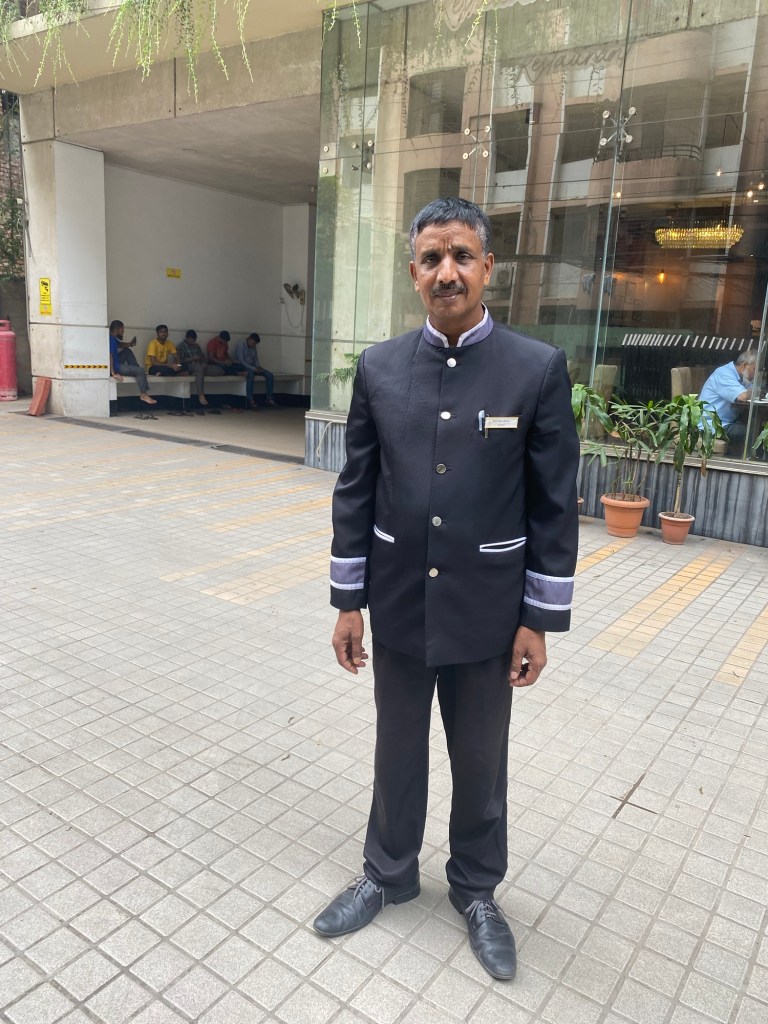
Another Mostafa, the hotel head porter took me into the labyrinthian alleyways behind the market where street food was cooked giving a wonderful aroma.
It was time to go.
Goodbye Beautiful Bangladesh that filled me with love for two weeks. I am still in contact with my new Bangladeshi grandson, Shan on a daily basis.
 Red Wine In MY Seventies
lovely Trish, thank you for sharing your experiences
LikeLiked by 1 person
Thanks Len
LikeLike
Hi my dear Trish – a wonderful voyage you did over there – so much to discover in the world, isn’t it? Jo
LikeLiked by 1 person
Thank you Josiane.
LikeLike
Amazing Mum. So evocative. Did the tourists from hell make it out alive? Or did you leave their corpses floating in a mangrove swamp?
LikeLiked by 1 person
Wonderful photos, amazing people …. Not your companions!…. Beautiful country off the beaten tourist track. Sense of peace…
LikeLike